Posted on 06/30/2013 6:14 AM ?|?Updated 06/30/2013 6:14 AM
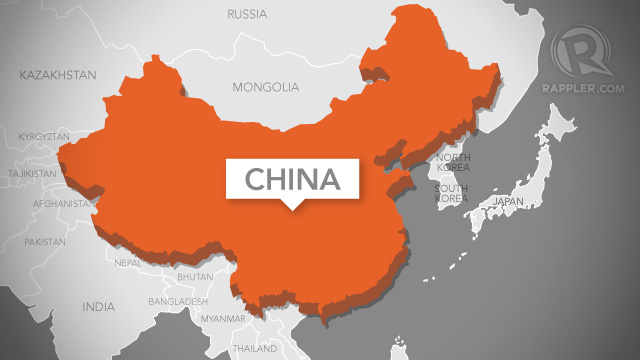
URUMQI, China - China staged a large military exercise in the ethnically-divided Xinjiang region on Saturday, June 29, after dual clashes this week branded as "terrorism" killed at least 35 people.
Tanks, military vehicles, and armed personnel blocked access to streets in Xinjiang's capital Urumqi, where at least 1,000 personnel carried out the exercise, an AFP reporter present at the scene said, with large sections of the city's center shut down.
"Isn't it obvious? It is being staged because of the latest terrorism attacks," one local woman who did not give her name said of the exercise, which locals said was highly unusual in that scale.
The drill came ahead of the fourth anniversary on July 5 of riots in Urumqi between members of China's mostly Muslim Uighur ethnic minority and its Han majority, which left around 200 dead.
Saturday's exercise -- which began this afternoon and was expected to last around five hours -- was carried out by members of the People's Armed Police, part of China's armed forces responsible for law enforcement and internal security during peacetime.
China's state-run media on Saturday blamed over 100 people it branded "terrorists" for sparking "riots" in Xinjiang the previous day.
The unrest took place in the prefecture of Hotan, where a group "(attacked) a number of people with weapons after gathering at local religious venues", the state-run Global Times said.
It followed clashes on Wednesday, June 26, which left 35 dead, the worst to hit the western desert region -- home to around 10 million members of the Uighur minority -- since the 2009 riots. China called the incident a "violent terrorist attack".
Radio Free Asia, which is funded by the US government, quoted a source as saying police in Hotan opened fire on Uighurs as they left a local mosque.
"Young Uighurs on motorcycles were leaving the mosque, they were shouting religious slogans...The police were frightened and started shooting at them ... At least two died and one was injured," the report said.
A state-run news website, Tianshan Web, said that no members of the public had been killed or injured, without stating whether police or government staff had died.
China's President Xi Jinping said, following the attacks, that "(the incidents) must be handled quickly to guarantee the general stability of the society", Tianshan Web reported on Saturday.
China often labels outbreaks of sporadic unrest in the region as terrorism -- claims denied by Uighur rights groups who blame unrest on economic inequality and religious repression.
Meanwhile, a senior ruling Communist Party official has called for "24-hour patrol" by armed police in the restive region, the official Xinhua news agency reported.
It was not possible to verify details of Wednesday's clash independently as reporters were barred from entering the town, detained and later followed by local police.
The Uyghur American Association, run by exiled members of the minority, said a "blackout of news" on attacks in the region cast doubt on Chinese government claims in a statement released on Saturday.
"The state then uses its propaganda apparatus to label the incident 'terrorism' without presenting any evidence that can be independently proved," the group said.
The recent unrest occurred ahead of celebrations for the Muslim Ramadan festival -- which Uighurs have said are repressed by local authorities.
AFP reporters saw members of China's armed paramilitary police transported near Lukqun, the town affected by riots on Wednesday.
Residents contacted by AFP by telephone said police, some armed, were lining streets and intersections in the town following the attack. Another local resident told AFP he could not send text messages to the area.
Locals in Urumqi said the city was divided into Uighur and Han districts, and one taxi driver, who did not give his name, said that Han residents were avoiding Uighur dominated areas in the run up to the anniversary.
Official figures say 46 percent of Xinjiang's population is Uighur, while another 39 percent are members of China's dominant Han majority.
In recent decades millions of Han have relocated to the region -- which is rich in coal and gas -- to find work, in a settlement drive that has caused friction in the community.
Beijing denies repressing ethnic minorities, who make up less than 10 percent of the national population and enjoy some preferential policies.
China closely restricts information about unrest in Xinjiang, and blocked access across the region for several months after the violence in 2009. - Rappler.com
Source: http://feeds.rappler.com/~r/rappler/~3/omzC5RCXxAs/32526-military-exercise-china-xinjiang
i robot the big c the visitor king of kings ostara masters 2012 andy kaufman


 Mobile virtualization startup BlueStacks only recently revealed the GamePop, its mobile home gaming console that offers all-you-can play gaming for a flat monthly fee, but it's already expanding the line. Today, the company is announcing GamePop Mini, a version of the GamePop that offers completely free hardware with a standard $6.99 monthly GamePop service subscription, with smaller hardware that's yours to keep after 12 months even if you decide to cancel your GamePop account.


 Editor?s note:?Vivek Wadhwa is a fellow at Stanford Law School, Director of Research at Pratt School of Engineering at Duke University, and VP of Innovation and Research at Singularity University. The passage of immigration reform by the Senate was a big step forward. The bill is far from perfect, but goes a long way towards solving Silicon Valley?s talent shortage -- and America?s immigrant exodus. But big hurdles lie ahead as anti-immigrant groups regroup. Extreme elements of the right will be fighting to close the borders while their counterparts on the left -- Big Labor in particular -- work to undermine high-skilled immigration.
 One developer feature Google is really stressing these days is Google+ Sign-in, the company’s recently launched authentication tool for third-party sites and mobile apps. While the company will continue to support its standard Google Sign-in tool as well, it’s pushing hard to get users to switch to its new system. The Google+ version has the advantage (or not, depending on your perspective) of being linked directly to Google’s social network and profiles and?can therefore provide sites with easier registration system and more information about their users. A number of large companies have now integrated Google+ Sign-ins, and we are starting to get some data about how things are going. Mind you, these are somewhat self-selected Google partners, but the results are still pretty interesting.?Most companies don’t want to go on the record with their numbers, but Google just published a case study with Snapette that’s pretty much in line what we’ve been hearing, too. Snapette Case Study: 44.2% Use Google+ Sign-ins, Registrations Up 16% The latest numbers come from mobile shopping app Snapette, which launched in 2011, and this marks the first time we’re seeing some of these stats for a service that uses Google+ Sign-in. Just over 44 percent of the service’s users now use Google+ to sign in to their accounts. That’s a bit higher than the 40 percent acceptance rate Google itself cited earlier this year. Snapette also says it’s been seeing an uptick in user registrations since integrating this feature. The company says it saw “an increase in registered users of 16% above average growth” since it started using this tool.